Massimo Dutti in Rome: when a building becomes part of the marketing
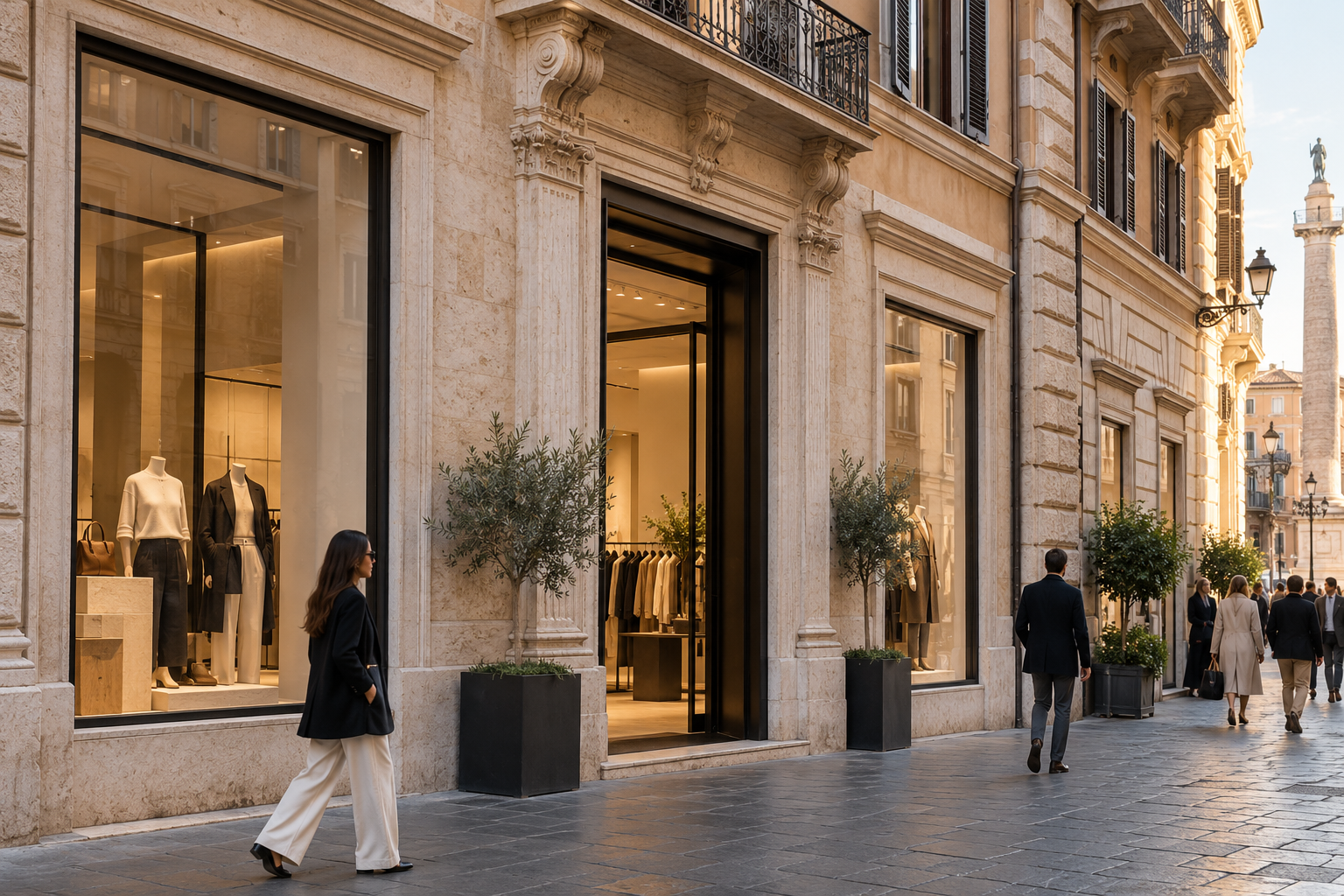
A shop can tell a brand’s story before anyone steps inside. That is what comes to mind when I consider Massimo Dutti’s decision to open in central Rome: when retail meets a historic building, the location becomes part of the message.
In fashion, the physical space contributes to a product’s perceived value. Materials, light, proportions and displays suggest a particular sense of style. A restrained window display, an editorial photograph or a striking entrance can communicate a positioning more immediately than a lengthy description.
Massimo Dutti, part of the Inditex group, draws on the codes of contemporary elegance: clean lines, understated tones and an international image. In this context, choosing Rome means engaging with a visual heritage that audiences already recognise: architecture, history and beauty.
The building therefore becomes more than a setting. It forms part of the experience and influences how visitors interpret the brand. The relationship between the building, the products and the interior is crucial: the prestige of the address must be reflected in the experience inside the shop.
There is also an interesting meeting of identity and place: a Spanish brand with an Italian name chooses the Italian capital to express its vision of style. The name, the urban setting and the shopping experience all contribute to the same story.
In my work, I see these details as part of the strategy. Positioning also takes shape through decisions that may seem secondary: where to meet an audience, what feelings to evoke and how to relate to the surrounding context.
That is why an opening like this interests me. It reminds us that a brand communicates through what it sells, and through the places and ways it chooses to present itself.
Back to articles© 2026 Mauro Fanfoni · Italy ↔ Brazil