Shop windows, 175 years of communication: when objects tell the story of a brand’s world
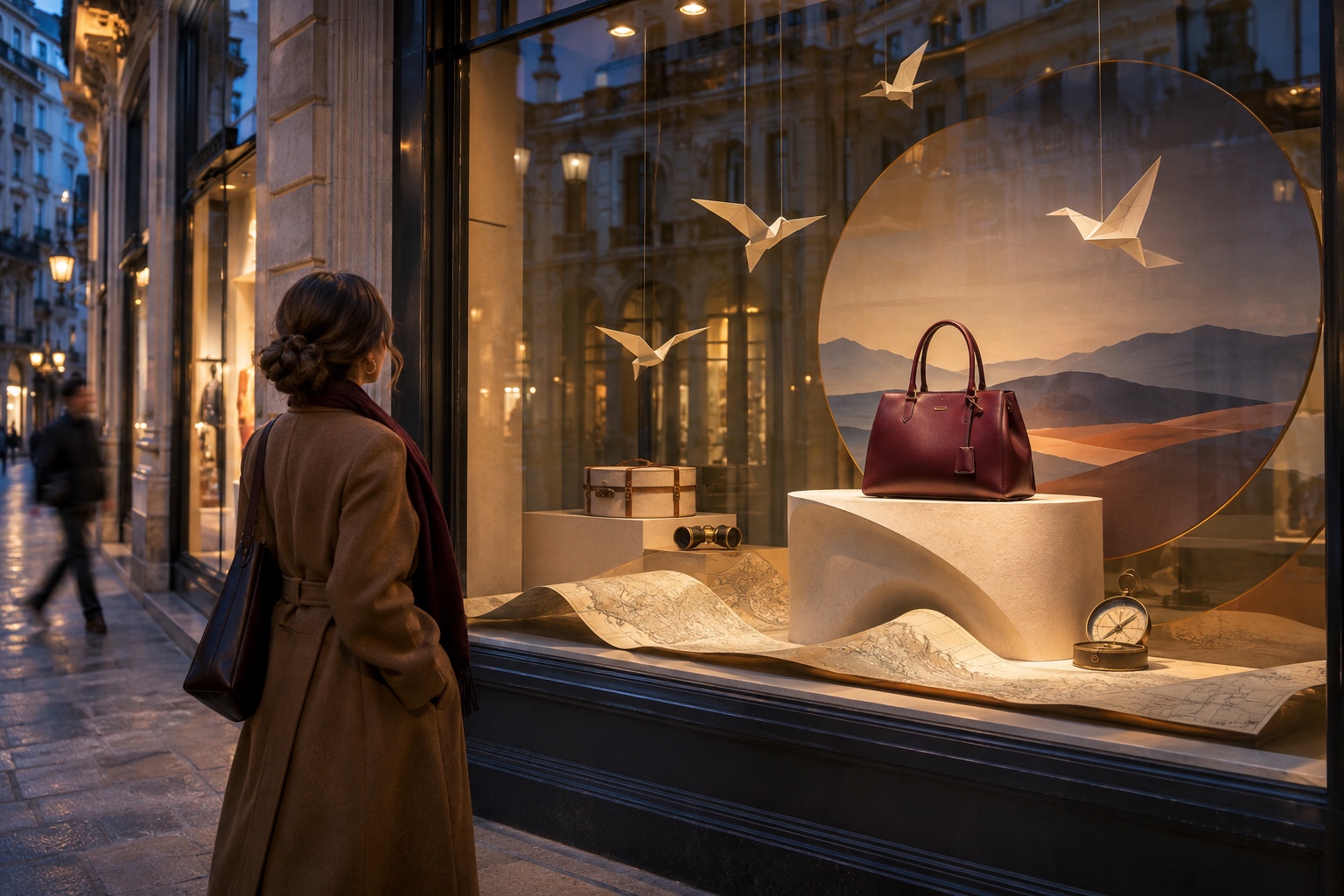
Before we enter a shop, we have often already stepped into its world. All it takes is a pause in front of a window: a light, a single object, an unexpected combination. In a few seconds, that composition can suggest elegance, adventure, exclusivity or familiarity. The product is still behind glass, but the relationship with the brand has already begun.
Talking about shop windows turning 175, however, calls for a clarification. The year 1851, when London hosted the Great Exhibition at the Crystal Palace, is a symbolic reference point for modern display culture, rather than the birth date of the first commercial shop window. Shops had already been showing their goods through openings and glazed surfaces. Above all, it was the spread of large panes of glass during the nineteenth century that changed the relationship between shops and the street, giving retailers an increasingly generous space in which to catch the eye.
The change was both technical and cultural. Glass made goods visible before anyone crossed the threshold. It allowed people to look without asking, compare without committing, and desire without buying. The street became a shopping gallery, and the passer-by a potential audience.
This laid the foundations for window shopping: strolling past shop windows and allowing curiosity to take hold, even without a planned purchase.
When the product becomes a spectacle
With the rise of department stores, the shop window took on an increasingly theatrical role. Displaying meant choosing protagonists, building a scene and directing attention. Backdrops, mannequins, lighting and decorations transformed a selection of goods into a small urban spectacle.
An emblematic moment was the opening of Selfridges in London in 1909. Its windows were unveiled from behind silk curtains and treated as works capable of drawing a crowd. The store presented itself as a place for meeting and entertainment, where looking and browsing were part of the experience. Commercial communication moved beyond product information to embrace leisure time and social life.
Here we can recognise a marketing principle that remains relevant today: to sell an object, we also need to make it meaningful.
A bag can be presented as an accessory, or become the starting point for an imaginary journey. A dress can reveal a tailored cut, or evoke an evening, a setting, a way of being. The staging creates the context in which the product acquires value in the eyes of the viewer.
A gateway to the world of brands
Throughout the twentieth century, this storytelling ability developed into an increasingly sophisticated language. A shop window can suggest an identity through just a few elements: materials, colours, proportions and empty space. Even the amount of room left around an object communicates a positioning.
Leïla Menchari’s work for Hermès is one of the most eloquent examples. From 1978 to 2013, her compositions transformed the house’s windows into fantastic worlds, where objects interacted with bold, imaginative settings. The brand entrusted part of its story to these displays, making its creativity and craft culture visible.
The shop window thus becomes a symbolic threshold too. Before discovering a collection, the public encounters a vision.
This mechanism also applies to businesses far removed from luxury. A bookshop creating a themed journey, a furniture shop suggesting a way of living, or a food shop telling the story of its products’ origins are all doing the same thing: giving meaning to what they sell.
Effectiveness depends on consistency. A spectacular display can attract attention; for that attention to become a relationship, it must express something recognisable about the brand.
From the street to the screen
With digital media, a shop window’s audience can extend far beyond the pavement. A composition is photographed, filmed, shared and discussed. Someone encountering it online might be in another city and never enter that shop.
The installations created for the collaboration between Louis Vuitton and Yayoi Kusama in 2023 illustrate this transition well. In New York and Tokyo, robotic figures of the artist appeared to paint her celebrated polka dots on shop windows: a physical scene capable of fuelling the circulation of images and videos too.
From a communication perspective, the shop window therefore also takes on the role of content. Its value can continue to develop after the passer-by has moved on.
Yet a crucial question remains: what is remembered? The creative display, the product or the brand? If the spectacle absorbs all the attention, the installation’s fame can outstrip understanding of its message.
Does window shopping still exist?
Yes, although today it is useful to see it as a behaviour spanning different places and moments. We can discover a product while walking, search for it on our phone, return to see it in person and buy it later. Or we might arrive in front of a shop window after already seeing it on social media.
Desire does not necessarily follow a linear path.
A stroll nevertheless retains a particular quality: it opens us up to unexpected encounters. Online, discovery is often mediated by searches, recommendations and selected content; on the street, a light or an unusual composition can interrupt our route.
That is why a shop window’s role deserves to be assessed beyond the immediate act of entering the shop. It can build recognition, leave a memory and make a brand familiar. It can begin a relationship that will mature elsewhere.
The challenge for brands is to give people a reason to pause. Filling a space with products is easy; building an image capable of expressing an identity requires a clear choice.
After almost two centuries of modern display culture, the fundamental gesture remains the same: someone is walking, something surprises them, their pace slows. It is at that instant that a shop window begins to communicate.
All articles